Thursday, May 14, 2020

Roaring Back Economically - Now is the Time for a Basic Income and National Healthcare

American Spirit

The View From Rattlesnake Ridge
Ruminations from an Unabashed Optimist, an Environmental Patriot and a Radical Centrist


Roaring Back Economically
Now is the Time for a Basic Income and National Healthcare


In this age of Covid-19, I am unable to experience the day to day joys of sharing time with neighbors and measuring their sentiments, hearing their stories, and drawing on them for life lessons. There will come a time, again, when we will be able to do this, and again I will return to my perambulations among neighbors in search of their stories and sensibilities for this column.

For now, my walks and rambles are solitary. I am alone with only my thoughts, the sounds of the brook, the wind, the pileated woodpeckers hammering at the trees, the red squirrels chattering at me. Some days my thoughts are small and parochial. Some days they range like a mountain lion, covering ground like a river tracing its tributaries high into the rocky precipices.

Lately, most of those thoughts have focused on the tragedy confronting our beloved American family.  Today, my mind wandered to my other family, a proud part of the American family but also distinctive in its own way.

My Grandfather’s people, and by birthright mine, the Haudenausanee - also known as the Iroquois - in the early years of the republic would range well down into the Rattlesnake Ridge area from time to time, sometimes in search of game and other times empire. For 500 years before the birth of the United States, the Iroquois people nurtured and sustained the first and only democratic republican form of government. Long before the birth of Jefferson and Adams, even before John Locke from whom Adams and Jefferson drew inspiration, the Iroquois were gathering to make decisions collectively and democratically. There is evidence that Ben Franklin looked to the Iroquois confederacy as he helped craft the US Constitution.

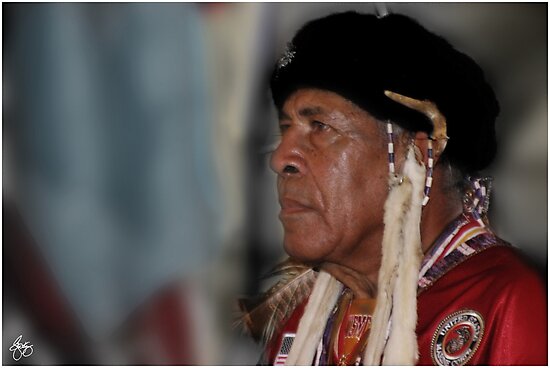
Esheheman's Breath

One of the most striking aspects of the Iroquois Confederacy’s democratic deliberations is that they were required to consider the effect of their actions, not just in terms of their immediate needs, but in light of the effect on the next 7 generations before arriving at a decision. So today I am doing just that in my rambling ruminations.

This pandemic has laid bare many of the weaknesses in our democracy and our economy. A significant portion of the economic tragedy has its roots in an economy that for 50 years - since the early 1970s - has slowly drained wealth from the middle class, the working class and the poor. Only a year ago a report from the Federal Reserve found that 40% of Americans would be unable to cover a $400 emergency with cash, savings, or a credit card. This growing disparity of wealth had already begun to blossom into a crisis before we were struck with the Covid-19 crisis affecting every aspect of American lives.

The existential crisis of Climate Change has faded from the light of public discourse, eclipsed by an even more immediate crisis. But, like the Covid-19 Pandemic, Climate Change is a science-based crisis and if there is one thing that we have all learned - with the possible exception of the Trump administration - science-based challenges don’t respond to lies, bullying, and spin. Eventually, they will bite you.

The marginalization of communities of color has come into full public view as the numbers of cases and deaths among black, brown, and Indian communities dramatically outpace even the high numbers among the general population.

These and other challenges are mixed in the rich stew of partisanship and culture wars, cooked up by Newt Gingrich in 1994 and today boiling vigorously as Donald Trump turns up the heat in anticipation of the coming election. One need only count the number of times the President uses the words “I” and “me” when he addresses the nation or the media, and how little he uses the word “we”. His lack of empathy for the 80,000 plus Americans who have lost their lives is shocking and disheartening, but not surprising.
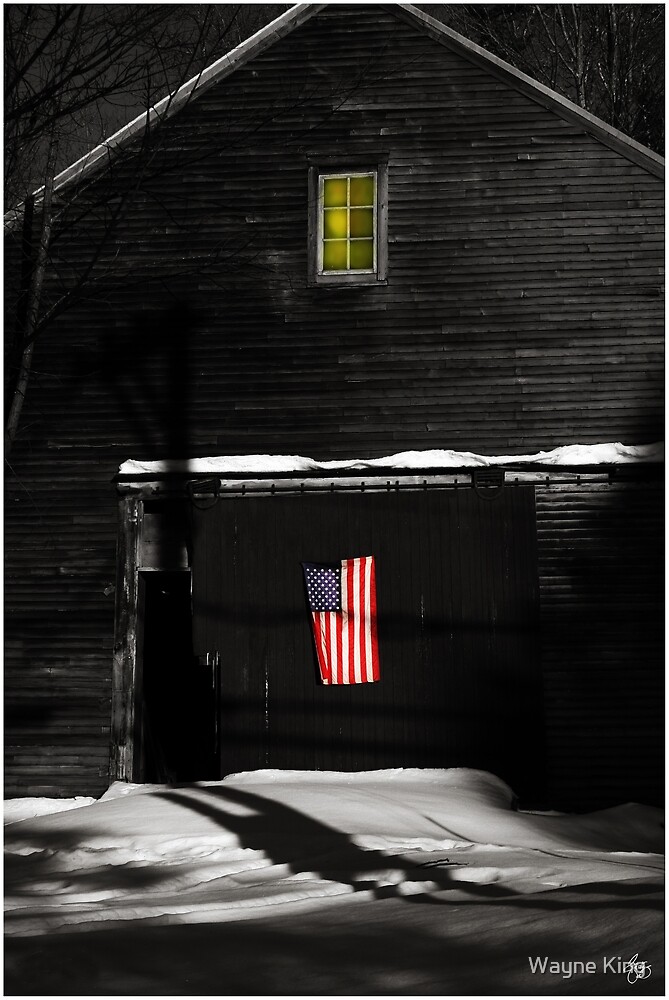


The good news is that American’s have come together as we always do in a real crisis. There are signs that the efforts of a small vocal minority supported by the President are causing even that rare unity to fray but polling shows that most people have taken their lives and their safety into their own (well-washed) hands and have stopped listening to the President and turned their attention to those who will tell them the truth.

Even Congress has demonstrated a willingness to push partisanship aside in the best interests of the American people. Let’s hope they continue to do so because the challenges ahead are going to require that they continue to step up and that the sacred cows of both the Republicans and the Democrats will be put to the test and found wanting.

This Pandemic raging around us has created the perfect storm for many Americans - a catastrophic convergence of forces over which we have almost no control.

Since the beginning of this pandemic, it is estimated that 27 million Americans have already lost their health care insurance and that number may rise to 45 million before the worst is over. Despite this, the Trump administration refuses to reopen enrollment in the ACA, otherwise referred to as “Obama Care”. Congress should immediately reopen the ACA enrollment. Furthermore, they should do something they have stopped doing for a long time - taking a page from the Iroquois Confederacy and looking for solutions that consider the next 7 generations of Americans. Americans deserve a national healthcare plan that covers every single American.

Over the course of the last few years I have made the case for an American Dividend, more commonly referred to as a Universal Basic Income based on the presumption that Americans have contributed to the wealth of the nation through their sacrifices, their labor, and their taxes - but have never been included as shareholders in the economic miracle. I won’t reiterate all of the arguments for a UBI here, but you can read previous columns about it and there are a lot of people of all political persuasions who are now talking about it and writing about it. What I will do is try - in a few paragraphs - to make the case for doing it NOW - even as a temporary measure - as the most effective way to drive our economy forward and find our way out of this pandemic while respecting and protecting one another.

As impatience grows for restarting our economy and for resuming some semblance of normalcy in our day-to-day lives we will continue to experience the push and pull between economic needs and health and safety needs. While we must let the science and data drive our decisions in order to minimize the rate of new infections and deaths, we clearly must begin making efforts where possible to reopen the economy and return to life in a new normal. However, the challenge we face is one at the confluence of science, psychology, and economics, presenting a significant challenge and the need for our leaders, and each of us, to exercise judgment. Even as our Governors and policymakers begin this process, carefully laying out rules regarding testing, tracing and isolation, social distancing, and other safety measures, many folks will not be comfortable resuming “normal” life without confidence that we have flattened the curve sufficiently to make venturing out safe. Furthermore, rebounding economically, especially for our small businesses, will be profoundly challenging at 25% or even 50% of their previous capacity. We need to find a way to harness the economic power of both those who are ready to venture out and those who are not. Here’s where a basic income for every American can drive a robust resurgence.

Amazon founder and CEO Jeff Bezos makes $6.54 billion dollars per month. If he dines at the most expensive restaurant in America, “Per Se” Restaurant in New York City, it will cost him $685.00. In his home state of Washington, “the Herbfarm Restaurant”, located on the outskirts of Seattle will cost you a more affordable $285. But Jeff Bezos can only eat ONE dinner.

One month of Jeff Bezos income would cover a $2,000 basic income for three million two hundred seventy thousand Americans, roughly 1% of the entire population; men, women and children; roughly 2% of American households.

So here’s a simple question: What is going to have a greater impact on the US economy: a month of dinners for Jeff Bezos (at $8,550) or 10 million dinners purchased by American families from local grocery stores and restaurants? Which of these is more likely to help save small businesses on Main street?

Now I’m not picking on Jeff Bezos, whom I admire immensely, but last year any one single American paid more in taxes than Amazon, which paid no taxes because of a tax code heavily skewed to the wealthy in our nation.

Businesses don’t create jobs, CONSUMERS create jobs through demand and businesses respond by hiring labor sufficient to meet the demand. It’s simple economics.

Put a basic income of $2,000 per month in the pockets of every American for the remainder of the year and it will cost half of what any of the previous 3 “relief” packages have cost and you can bet that - whether they are sheltering in place or out and about - Americans will drive the economy and support their local businesses. With real disposable income, the free market will determine how that income is used and most of the businesses we know and love in our communities all over America will find a way through this crisis. Furthermore, you will see a flurry of new entrepreneurial activity as Americans find new ways to create jobs and generate income using some of that disposable income to launch startups. In addition to this the President, The Speaker of the House, and the Majority Leader of the Senate, should appoint a blue-ribbon task force to look at ways to fund a basic income permanently.

None of this should be construed to ignore the need for an aggressive, nationally-directed system of testing, tracing, and isolating. If we had a national service requirement, that most Americans - from all parts of the political spectrum - support, we would be able to activate that network of millions of Americans to do the testing and contact tracing. As it stands the use of Americorp and Peace Corps volunteers could be activated immediately to fill much of the need. If we do not aggressively develop such a system quickly, few of us will feel comfortable about emerging into a world where a simple, and desperately needed, embrace can end in tragedy.

Americans of all political persuasions have set aside their differences in this pandemic and we can hear the faint but growing sound of the American song rising from their efforts, as they cheer for our frontline heroes, as they check on elderly neighbors and greet one another walking in the park or on the trail, even in acts as simple as paying for the coffee of the next car in line at the Dunkin Donuts drive-through.

Keep singing. Don’t let tribalism and partisanship derail what could be the great American renaissance after we beat back Covid-19. Dream 7 generations ahead.


Wayne King is an author, artist, activist and recovering politician. A three-term State Senator, he was the 1994 Democratic nominee for Governor and most recently the CEO of MOP Environmental Solutions Inc., a public company in the environmental cleanup space. His art is exhibited nationally in galleries and he has published three books of his images with another, "New Hampshire - a Love Story", on the way. His most recent novel "Sacred Trust" a vicarious, high voltage adventure to stop a private powerline is available on Amazon.com. He lives in Thornton, between Rattlesnake Ridge and the Waterville Range. He proudly flies both the American and Iroquois Flags. His website is: http://bit.ly/WayneDKing
UBI, Basic Income, American Dividend, Roaring back, recovery, Pandemic, Covid-19, truth, testing, healthcare, insurance, national service

Monday, August 5, 2019

Leaving Home 2.0: The Heart of - and Hope for - America Lies Next Door

Leaving Home 2.0
The Heart of - and Hope for - America Lies Next Door


Well I left my happy home to see what I could find out.
I left my folk and friends with the aim to clear my mind out.
I hit the rowdy road and many a kind I met there. Many a story told me of the way to get there.
So on and on I go and seconds take the time out there’s so much left to know and I’m on the road to find out.

~ Cat Stevens


With tears in my eyes I made a final walk-through of my now-empty happy home. About to become the happy home of Jill and Oli and their two beautiful children.

It had been almost a year since losing the love of my life, Alice, and here I was about to experience a second wave of grief. . . Leaving home 2.0. It turned out to be both a source of immense sadness and a powerful and positive lesson in life because the process of saying goodbye to Rumney gave me a new appreciation for what it had given me all these years.

Most of us will have to experience this at least one time, if not more, in our lives. I remember leaving home 1.0, but because of college and some travels with my friend Christopher afterward, the transition did not really seem so difficult then.

I remember that NH’s Tom Rush provided the music of that moment with his “Child’s Song”.


Goodbye Momma
Goodbye to you too Pa.
Little sister you’ll have to wait a while to come along.
Goodbye to this house and all its memories . . .
Got to make one last trip to my bedroom. Guess I’ll have to leave some stuff behind.
Funny how the same old crooked pictures, just don’t seem the same to me tonight.

~ Tom Rush

It was spring of 1980 when I put down one month’s rent and one month security on a little brown shingled cottage on Main Street in Rumney owned by Joe and Nancy Kolb. Joe and Nancy lived across the street in a rambling beautiful home that served as both their residence and a space for Joe’s woodworking business and Nancy’s Quilt shop. In the three years I lived there Joe was always only a phone call away if there was a problem. He was the model of a reliable landlord and a good neighbor.

Just to the south lived Donald “Pick” Jaquith who was widely acknowledged to have the most beautiful flower gardens in the area. I would often look out my windows toward his gardens and see various neighbors, including Betty Jo and Bill Taffe, or Ann Kent walking the garden with Pick. Pick died a few years after that and he would have been thrilled to see that Betty Jo and Bill picked up the torch after him. Today people stop to look at their beautiful gardens as often as they did with Pick’s. Pick Jaquith showered the community with love and flowers for most of his life and now that role falls to Bill and Betty Jo.

Betty Jo was a Republican State Representative when I first moved to town and for quite a few years after that. She established herself as the leading House authority on Education and she was part of an extraordinary contingent of smart, powerful and moderate Republican women who made all of us proud to be anywhere in their orbits: Donna Sytek, Phoebe Chardon, Liz Hager, Sally Townsend and Caroline Gross to name a few. When I ran as a Democrat for the Senate a few years later, Betty Jo had to be careful about her involvement - but Bill was at my house several times a week building lawn signs and providing moral support. I always knew who’s corner both of them were in and I have always been grateful.

Just down the road from Betty Jo and Bill, Cindy Perry and Norrie Parr have lived since before Alice and I built our house up on the Stinson Lake Road. Cindy was a teacher in the Russell School for all the years that Zach was a student there. She was his favorite teacher and he never misses a chance to visit her when he returns to town, even for a few days. An extraordinary teacher breathes life into a child’s imagination that lasts a lifetime. Cindy was that kind of teacher. Norrie was the consulting forester at Grafton County Cooperative Extension and he was always willing to pay us a visit when we needed advice about logging or just managing our small wood lot. Norrie had forgotten more about trees than I ever knew - even though I had been a dendrology ace at UNH during my college years. Cindy, and her neighbors Diana Paquette, Maggie Everts, Barbara McElroy, Melody Funk, and others, along with Alice, were among an extraordinary group of women who formed “GotLunch! Rumney” to provide lunches to children in town who might not have adequate food during the summer months, when the school lunch program was not a source of sustenance. There were plenty of us of the male persuasion who supported the effort, but the brains and the heart of the organization were these amazing women all of whom enriched Alice’s life and mine immeasurably.

As I drove away from my life in this extraordinary town for the first time I thought back on many of those who had come before but were no longer with us. Faith Moulton, from whom I bought my first home, a 17 room monstrous farmhouse with only ¾ of a bath in the entire building and not a lick of insulation anywhere. Faith helped me finance the purchase by taking a second mortgage and I gave her a place to live for a year while she made the transition in her own life. At any one time the building had been the town’s funeral home, Post Office and Town clerks office under the direction of Faith’s late husband Lyn.

There was Doris Tunnell and her daughter-in-law Betty. Doris was a rock ribbed Republican who introduced me at my first Senate campaign announcement. She wore those big glasses so fashionable in the sixties that looked like they had wings. Her smile held a thousand secrets and a sense of humor second to none in Rumney.

I’ve told you in this column about Ann and Joe Kent who started the Quincy Bog Natural Area. Joe and Ann were the James Carville/Mary Matalin of Rumney. He a Colonel from Vietnam and a true conservative, just as interested in getting the most from a dollar as he was in conserving the natural resources of Rumney including the Bog. Ann had a heart as big and generous as the Mountains. Her heart beats still in her daughters Jennifer and Martha. She was the liberal wing of the Kent household. But like the birds they both spent hours watching together, they flew highest and strongest when both wings were strong and working together as one. Ann and Joe were as different in their ideologies as two people could be yet both were deeply committed to our community. After Joe died Ann had an honored seat at our Thanksgiving and Christmas table every year along with our neighbors Kevin and Debbie Maes and their family. Kevin & Debbie Maes have been friends and neighbors since Alice and I moved in. I was away in Africa on business one year when a microburst felled huge White Pines across our driveway, knocking out the power and stranding Alice and Zach. Kevin was there the next morning - chainsaw in hand - to make sure Alice and Zach were not stranded any longer.

Kevin later ran for State Rep and won and has served with distinction for going on 6 years now. He’s recently been joined by Francesca Gothie Diggs and I can honestly say that the town has not had better representation since Betty Jo Taffe made her mark. Francesca is already making a mark with a strong and empathic community focus to her service.

Not everyone who has had an impact on my life here in Rumney has been a friend or a fan. It took me a lot of years to get Bob Berti to mark the other side of his ballot but he was a giant among those who dedicated a big portion of their lives to the welfare of our little community and I respected the hell out of him and never gave up. Now I am proud to call him my friend and he once even admitted that he had put a check next to my name on more than one occasion.

Then there are Steve & Joanne Decosta - in my earlier years there was rarely a town meeting that didn’t find us on opposite sides of nearly every issue. Even on some very contentious state issues. Yet last year when my dog, Boof, escaped Steve and Joanne rescued him and called me to say he was safe and sound in their home. When I picked Boof up at their home we talked with one another like old friends and I came away humbled by the lesson.

Arthur Morrill was another person who showed up in support of my opponent in every Senate election and he always had a tough question for me - usually about run away spending. I gave as good as I got in those exchanges - usually suggesting that we should privatize the state agency that Arthur worked for - with tongue firmly planted in cheek. But when Arthur would show up to assess our home for tax purposes every few years he was always fair and honest. I learned an important lesson about honest dialog and free expression from Arthur and I will never forget it.

By now you are well acquainted with Micky Lewis - who kept our long driveway plowed and sanded every winter. Only a few months ago he told me how mad he was at me back in 2005 because I had revealed the location of our local swimming hole in “Heart of New Hampshire Magazine” because for a while it was overrun with “unwanted “ visitors. But his ire was unimportant when we ran out of wood during a brutal cold snap a few years ago and Micky dug into his reserve supply to make sure we stayed warm. Zach and the local young folks call him “coach” because he is always willing to give them the benefit of his wisdom and experience. Over the years he has done the same for Alice and I and we loved him for it.

I’ve only touched the tip of the iceberg that is my beloved community. There’s Keith and Andrea, Lee and Alan, Paul and Joan, Terry and Miriam, Brad and Laurie, Gary and Nancy, Edie, Wally, Brian, Collette and Tony, Mindy, Karen, Ross, and TJ, Carol and John, Nate, Brian, Adrina, Hank and Debbie, Mike and Dolly and I have not even gotten beyond Main Street. . .

Like the long and winding road on which I now find myself embarking, these vignettes I have shared with you have led me along a circuitous route to the lessons of community. They are the acorns that have grown to become the oak of my experience. The lessons I have learned from these people, and others, in my small town - both those still living and those no longer with us - fill my heart with gratitude. The lessons of community here in the shadow of Rattlesnake Ridge reveal a path to a future defined by hope, tolerance and a shared common humanity. The hope for our world and our democracy can be found here - and in every community - in the ever widening circles of our common values and our common humanity.

In his extraordinary book, “The Coddling of the American Mind” co-author Jonathan Haidt quotes civil rights leaders Rev. Dr. Martin Luther King and Rev Dr. Pauli Murray in describing this “Common Humanity Politics” a broadly encompassing and inclusionary vision that seeks to bring us together in common cause. He specifically quotes King’s “I Have a Dream” speech and the words of Rev. Dr. Pauli Murray:

“When my brothers try to draw a circle that excludes me, I will draw a larger circle that includes them. When they speak for the privileges of a puny group, I shall shout for the rights of all mankind.” 

For 35 years the people of Rumney have drawn those wider circles that declare we are in this together.

These lessons do not kill the sadness of the changes that must come but they amplify the joy that helps us continue on this journey we call life.

To all of the people of Rumney - thank you. You will be missed. I’m so happy and blessed to have traveled this road with you.


About Wayne D. King: Wayne King is an author, artist, activist and recovering politician. A three term State Senator, 1994 Democratic nominee for Governor, former publisher of Heart of New Hampshire Magazine and CEO of MOP Environmental Solutions Inc., and now host of two new Podcasts - The Radical Centrist (www.theradicalcentrist.us) and NH Secrets, Legends and Lore (www.nhsecrets.blogspot.com). His art is exhibited nationally in galleries and he has published three books of his images and a novel "Sacred Trust" a vicarious, high voltage adventure to stop a private powerline all available on Amazon.com. He now lives in Thornton, New Hampshire at the base of Welch Mountain where he proudly flies both the American and Iroquois Flags. His website is: http://bit.ly/WayneDKing . You can help spread the word by following and supporting him at www.Patreon.com/TheRadicalCentrist . 

Thursday, February 14, 2019

The NH Presidential Primary Centennial May Be its Swan Song

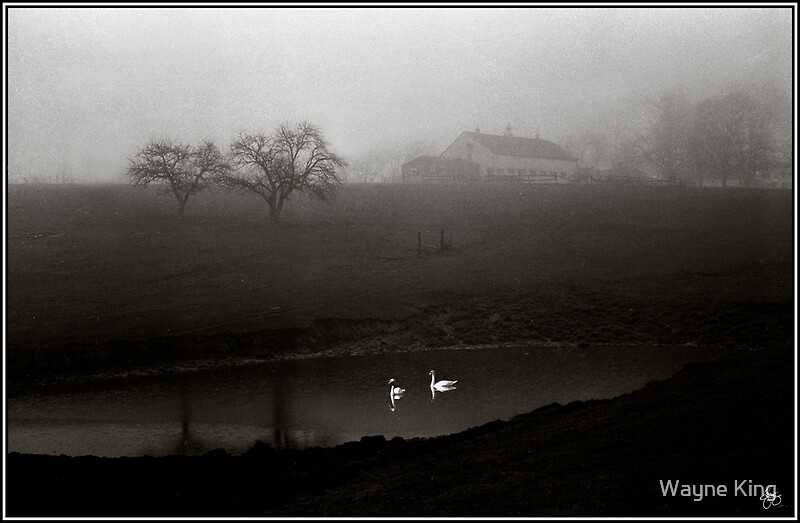
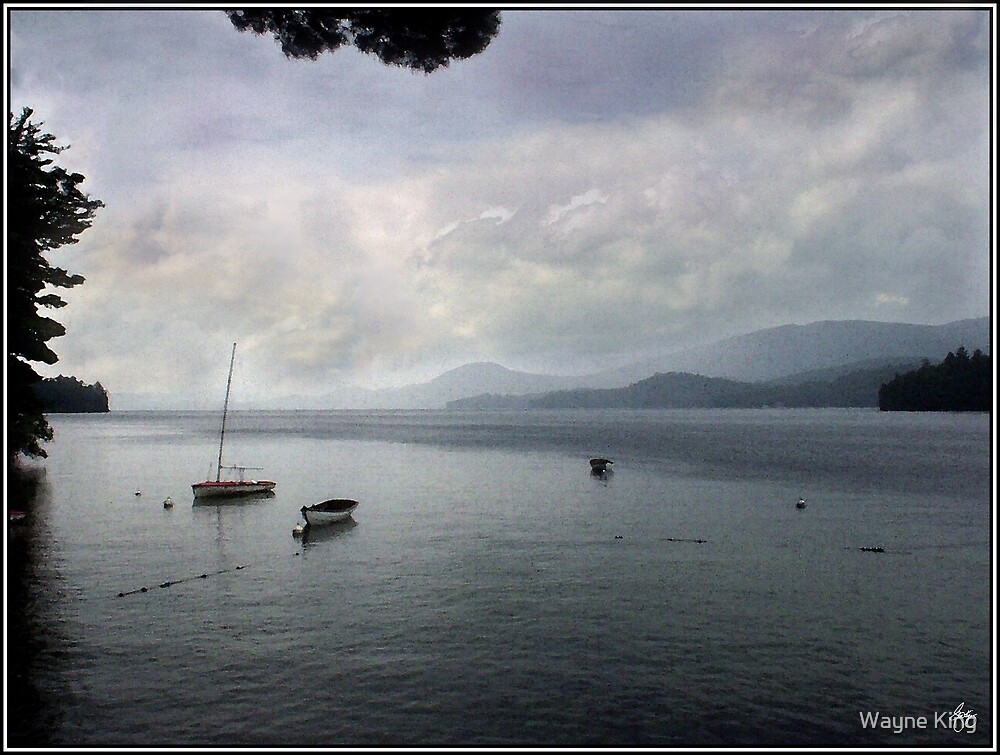
Swans on Scamman Pond


The NH Presidential Primary Centennial May Be its Swan Song
Without Ranked Choice Voting New Hampshire Presidential Primary Will Likely Become Irrelevant
Here in the shadow of Rattlesnake Ridge the sense that Democracy is broken is pervasive and alarming. Republicans and Democrats alike along with Libertarian and Independent voters seem to share a growing disgust with the tone and tenor of the election process and even more so the results of the elections - won by candidates with far less than a majority of votes - and the behavior of those elected by 17%, 20% or 30% of the voters, as they constantly seek partisan advantage rather than trying to work together.

The negative campaigning, that only seems to grow worse with each succeeding year; The bitter and poisonous partisanship that has infected the election process - characterizing even the elections for NH State House and Senate seats - are deeply discouraging to average voters. Worse still, what use to be the “governing phase” of the process where State Representatives and Senators settled into a far less partisan rhythm, intent on governing in the best interests of all their constituents - has virtually disappeared and the two parties now vie to see who can draw the most blood at a time when their constituents want them to be solving problems.
A Child's Dream Among Lupine

As if all this weren’t bad enough, The New Hampshire First in the Nation Presidential Primary, a near sacred institution here in the Granite State - already under attack from those who would like to see its preeminence abolished - is at its hour of maximum danger. Ironically, for the First in the Nation Primary - about to celebrate its Centennial year - that Centennial may also be its Swan Song.

Now I won’t represent that I have always been the staunchest defender of the NH Primary. I have in the past suggested that the divisiveness of the Primary process is harmful to the unity of both the Democratic and Republican parties and a distraction from confronting the challenges we face as a state, but as Emerson said “The years teach much which the days never knew.” The fact is that I have become convinced that the people of New Hampshire take very seriously their solemn responsibility to put the candidates through their paces and to narrow down the field. That alone is reason enough to defend the Primary.

But there has always been a procedural problem with New Hampshire’s Primary and with the size of the field among Democrats this year, that problem is magnified tenfold, just as it was for Republicans in the last Primary. In 2016 there were 17 candidates running in the Republican primary. Only 4 of the 17 received any delegates. As a result over 40,000 Republican voters choices were disregarded completely when it came to handing out delegates. To make matters worse the Democratic Party has recently raised their threshhold for awarding delegates in the Presidential Primary to 15%. In other words only those with at least 15% of the vote qualify for delegates. With as many as 30 potential candidates for the Democratic nomination there is a better than even chance that NO ONE will reach that threshhold. Leaving 100% of voters disenfranchised and allowing the Democratic Party to award those delegates to whomever they choose. In other words, the First in the Nation Primary will be nothing but white noise in the most consequential election of our lifetimes.

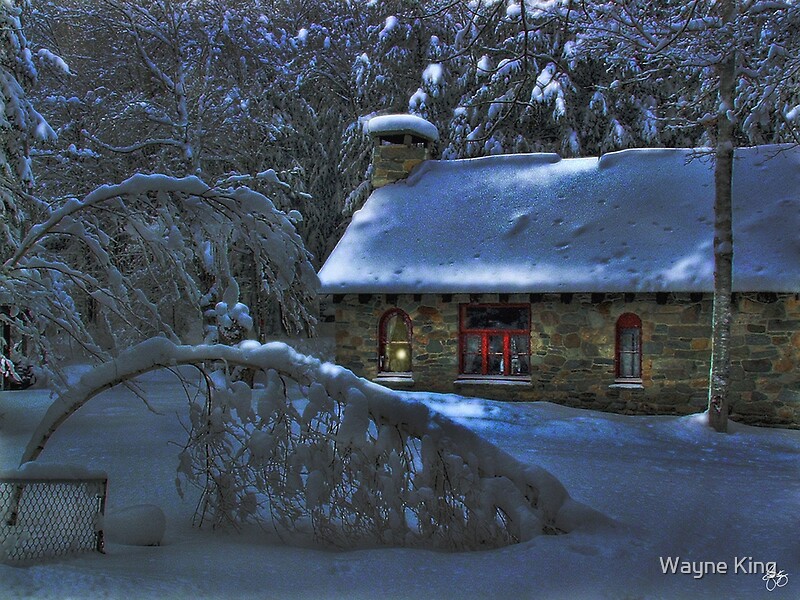
Moonlight On the Stone House


There is a way to resolve this and to save the NH Primary. Ranked Choice Voting. A bill before the NH House, HB 728, Sponsored by Rep Ellen Read of Newmarket, would institute a new system of voting called Ranked Choice Voting allowing every voter to rank their choice in order of preference. So instead of simply choosing one candidate you can select and vote for your first choice, your second choice and your third choice. When the ballots are counted if no one receives a majority of the votes the ballots for those with the fewest votes are reallocated to the second choice.

Maine has just moved smoothly to ranked choice voting with only 3 months between the final court challenge and the election. Mainers voted in record numbers and polling since the election shows broad support for the new system of voting. Iowa too is considering Ranked Choice for their Presidential Caucuses.

Ranked Choice has had a dramatic positive impact on the civility of elections in Maine and California where it is being used. After all what do you think would be a voters second and third choice if a candidate bad mouthed their competition with nasty nicknames or mudslinging?

Mr. Lincoln's Legacy
Ranked Choice means that all of the voters voices are heard, not just a small minority.

Ranked Choice voting puts 3rd party candidate on a level playing field with those in the two major parties but prevents them from becoming spoilers if voters don’t find their message compelling: Think the Bush-Gore-Nader Florida Primary.

Ranked Choice Voting is coming. It is a wave that will not be held back. The only question is whether the members of the NH House of Representatives will choose to be led astray this year by the major parties and sacrifice the NH Presidential Primary in the process. If that happens, the blame will fall squarely on their shoulders. Unfortunately, by then it will be too late.


About Wayne D. King: Wayne King is an author, artist, activist and recovering politician. A three term State Senator, 1994 Democratic nominee for Governor, former publisher of Heart of New Hampshire Magazine and CEO of MOP Environmental Solutions Inc., and now host of two new Podcasts - The Radical Centrist (www.theradicalcentrist.us) and NH Secrets, Legends and Lore (www.nhsecrets.blogspot.com). His art is exhibited nationally in galleries and he has published three books of his images and a novel "Sacred Trust" a vicarious, high voltage adventure to stop a private powerline all available on Amazon.com. He lives in Rumney at the base of Rattlesnake Ridge. His website is: http://bit.ly/WayneDKing . You can help spread the word by following and supporting him at www.Patreon.com/TheRadicalCentrist .


Links:
One minute video description of Ranked Choice Voting

HB 728

Status of Bills NH House and Senate

NH House and Senate Information


Ranked Choice Voting - The Radical Centrist Podcast


Tuesday, December 18, 2018

President Obama Receives the Robert F. Kennedy Ripple of Hope Award


President Obama recently received the Robert F. Kennedy Ripple of Hope Award and his outstanding speech not only is inspirational but also demonstrates why I have said that Bobby Kennedy was a Radical Centrist - loved by so many from every spectrum of our society - because he was authentic and through his hard earned moral clarity, showed us what together we could be if we believed and persisted. This is worth watching no matter your party or your ideology.
https://www.youtube.com/watch?v=6GkAEzEpeVg


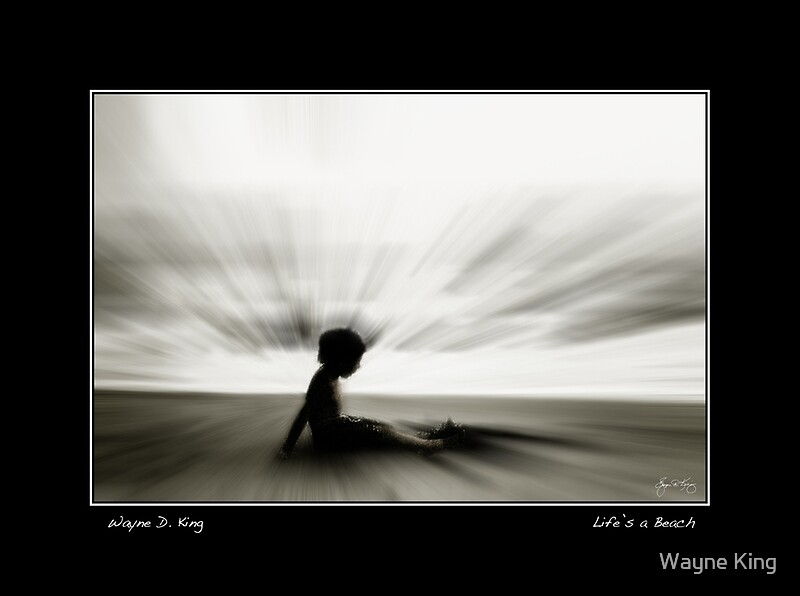
Life's a Beach - Fine Art Poster - 23"x31": $34.34
Silhouette of a young boy sitting on the beach. Fine art poster.
Shop this product here: http://spreesy.com/waynedking/260

Tuesday, December 4, 2018

Free Joseph Song is the theme for The Radical Centrist Podcast.


Very excited that my old friend and Reggae musician extraordinaire from the "Nature island of Dominca" Free Joseph has agreed to let me use some of his musical stylings for my soon to be released Podcast series "The Radical Centrist". I've chosen "Tell Me Why" from his CD titled "He is Here". It begins "We've got to Learn to Live Together . . . with some understanding and care for each other. Let's go the extra mile and do it with a smile."

Check it out here: https://www.youtube.com/watch?v=46KTxGAFR3g


Monday, November 19, 2018

Friday, October 26, 2018

Saving Democracy Means Changing the Game


If you have any doubt how important these upcoming elections are, you will have no doubt when you read my latest column "The View from Rattlesnake Ridge" at The NH Center for Public Interest Journalism's website: InDepthNH.org

http://indepthnh.org/2018/10/25/saving-democracy-means-changing-the-game/

Monday, October 8, 2018

Daylight Fades on Eisenhower: 10"x16": $29.95

Daylight Fades on Eisenhower

Daylight Fades on Eisenhower: 10"x16": $29.95

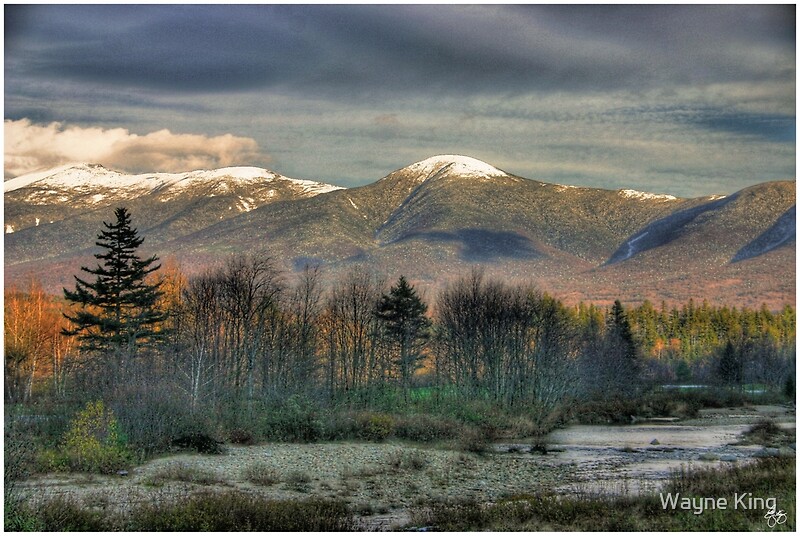
Late afternoon light paints the scene around a snowcapped Mount Eisenhower on the Presidential Mountain Range. Only one original of this image is created, signed, dated and with a certificate of authenticity. The image is used for creation of a digitally initialed open edition but otherwise archived and kept only for historic purposes and publications. To purchase an original contact the artist at waynedking9278@gmail.com.

The open edition, featured here is digitally initialed with a special signature stamp reserved for open edition prints only. It provides the closet approximation to an original work at a more affordable price, especially for those who love art but don’t feel the need to purchase original works.

Wayne D. King’s images are a celebration of life, blending the real and the surreal to achieve a sense of place or time that reaches beyond the moment into a dreamlike quintessentialism designed to spark an emotional response. Using digital enhancement, handcrafting, painting, and sometimes even straight photography, King seeks to take the viewer to a place that is beyond simple truth to where truth meets passion, hope and dreams.

Shop this product here: http://spreesy.com/waynedking/117 Shop all of our products at http://spreesy.com/waynedking

#WhiteMountains, #Eisenhower, #Pleasant, #O-B-Joyful, #Presidential, #PresidentialRange, #NewHampshire, #NH,

Tuesday, October 2, 2018

Finding Our Way Back to the Future


Posted by Wayne D. King
I'm working on a longer version of this for my next "Rattlesnake Ridge" column but here's one short observation from it.
Mitch McConnell’s protestations ring hollow in the fight over Judge Kavanaugh’s nomination to the Supreme Court. After all, it was McConnell who lit this fire in the first place by denying an appointment to Merrick Garland. McConnell, who clearly is more concerned with his strategies for giving the Republican party an edge electorally than his legacy, has proclaimed that denying a seat on the United States Supreme Court to Garland and Obama has been his greatest accomplishment. He may as well say that he is proudest of having blown up the process for selecting Supreme Court Justices and imperiled the Republic in one fell swoop.
Given the poisonous air that has developed over the Kavanaugh nomination and the tactics used by both sides that have veered well outside of the soft guardrails of democracy it seems clear that only a reimagined process for the selection of Supreme Court Justices will allow us to find our way back to comity.
The first order of business after the next election should be a national discussion on the process for nominating and approving Justices to the high court. This ugly fight was only a symptom of a larger issue in our politics but it is emblematic of how far we have sunk in the greatest democracy on the planet. Unless we change direction we will soon be stripped of our title.


About Wayne D. King: Wayne King is an author, artist, activist and recovering politician. A former State Senator, and 1994 Democratic nominee for Governor. Most recently CEO of MOP Environmental Solutions Inc., a public company in the environmental cleanup space. He lives in Rumney at the base of Rattlesnake Ridge and proudly flies both the American and Iroquois Flags. His website is: http://bit.ly/WayneDKing and his new blog and forthcoming podcast, “The Radical Centrist” is under construction at wayneking.org.
supreme court, kavanaugh, mcconnell, senator mcconnell, leader mcconnell, merrick garland

Friday, September 21, 2018

Establishing an American Citizen’s Dividend - UBI


A Universal Basic Income is NOT Free Money. It is the birthright of American Citizenship and Sacrifice and quite possibly a pathway to a new empowered and entrepreneurial age.

The good folks I live with in the shadow of Rattlesnake Ridge have always been a very hardy lot and it takes quite a bit to shake their cool. For example, long before the Gig economy was “A Thing” as folks say these days, these folks were adding a gig here and a gig there to keep their heads above water. They don’t complain about it, they just do it.

But in recent years something has happened, even here. The world is shifting beneath our feet. Dramatic changes are sweeping through our economy. Each year the changes accelerate. Americans are working longer and harder and yet they continue to fall further behind. For 45 years, since 1973, real wages and the wealth of our citizens have been declining. The growing, savage disparity of wealth in our country challenges our faith in the capitalist system and our Democratic ideals. Today, more than any time during my life, we are faced with the question of whether the American system of government will survive. Whether we will continue to be the beacon of hope we once were and the leaders of the free world. . . whether we will be the masters of change or its victims.

This column addresses what some call UBI or Universal Basic Income. In a nutshell UBI is a proposal to provide every American citizen who attains an agreed upon age (18 or 21 under most suggested versions) with a monthly income. For the sake of this piece let’s assume it is $1,000 per month. Every month, every qualifying American citizen would receive a check, or a wire deposit for $1,000 no matter where they fall on the income ladder. Rich, poor, working class, middle class, even the 1% would receive a payment.

No bureaucrat would supervise how it is used and no one could take it away from you. No welfare worker could claw it back because you earned too much at your job, although those at the highest income levels would probably pay most of it back in taxes and certainly wouldn’t really notice it.

It is a Dividend paid for simply being an American. For being the inheritors of 500 years of sacrifice, voluntary and involuntary, by those who came before us and the sweat of our own brows and the taxes we have paid.

It is reparations for 200 plus years of slavery if you are an African American; reparations for the theft of your land if you are Native American; for the theft of your wealth and freedom if you are a Japanese American whose family was incarcerated in internment camps during World War II; for years of low-paying wages that subsidized the American economy if your family arrived as immigrants and for years of paying taxes that built roads, bridges, airports and schools that educated our workforce and carried the products of businesses to markets.

It is the public benefit of providing a court system, purchased with our taxes, where justice can be found and for Intellectual property laws that protect the millions of patents that have rocketed so many Americans into prosperity.

It is the equity value of research done by the Department of Defense, NASA, DARPA, NIH and an alphabet soup of taxpayer funded agencies that have created everything from the Internet to GPS and Touch Screen Technology all being used today to the benefit of Apple, Google, Uber and thousands of companies in our high-tech society.

Having read these last few paragraphs you can understand why the term Universal Basic Income somehow falls short of describing the concept, and the notion that it is “free money” is, on its face, absurd. It is a recognition that we have failed for more than 200 years to recognize the role played by every one of our citizens collectively in the accumulation of wealth that has made America the most prosperous nation on the face of the earth. It is why I have chosen to call this an American Citizens Dividend.

If capitalism is to survive – and it must – because it is the only operating system that has been shown to work, we must create a capitalism that recognizes that the generation of wealth in a healthy economy comes from inputs from everyone and the benefits of that wealth creation should be shared by all of those who have contributed. In other words, as I have said before, we are all victims, we are all due reparations, we are all in this together.

Today, the American political and economic systems are in twin, enfolding crises.

More than 90% of job growth during the past two years has been contract work, without any safety net or benefits, including unemployment insurance if layoffs occur; 47% of millennials, who make up the largest portion of the workforce, according to surveys, are engaged in some level of freelance work, most in order to make ends meet.

Many researchers project that half of the working U.S. population will move into the gig economy within the next five years, without the safety net of benefits or unemployment or disability insurance.

A majority of low-wage employers are now requiring employees to sign non-compete agreements as a condition of employment. A worker at MacDonalds, who finds himself/herself with the opportunity to move to Burger King for two dollars an hour more must now calculate into their decision-making the very real possibility that her employer will sue to prevent her from taking the job.

The decline in real wages since 1973 has crippled the spending power of consumers. In a consumer driven society, we are witnessing the early signs of the potential extinction of the consumer. After all, the 1% can only buy so many pairs of socks, or pants, or skirts.

We have moved to Workforce 2.0 in the global economy, but our governance is still stuck in Democracy 1.0 and capitalism 1.0 and that is a real and growing problem. What will happen if we are unprepared for the day when 50% of today’s jobs are performed by robots and computer programs? What will happen to both the Amazon’s and the small businesses dependent upon consumers when all of their income goes to meeting basic needs and there is nothing left for purchasing items that are “luxuries” like socks and shoes?

In the coming months, more and more people will be talking about enacting a Universal Basic Income for every American to help them meet their basic needs. The Basic Income is not a new idea. It has been around since it was first suggested by Thomas Paine – yes that Thomas Paine. It was quite nearly passed into law during the tenure of Richard Nixon at his urging, supported by conservative economist Milton Friedman, liberal economist Robert Reich, libertarian Charles Murray and a list of distinguished thinkers from across the political spectrum. Of course, it has its detractors as well.

For the sake of a good old American discussion, take a deep breath and open your mind to the possibilities. This is only an introduction. Intended to present some of the many arguments for it. People of good will can come down on either side of this. I happen to believe that it may be the solution to America’s most long-standing problem, the wealth gap, as well as a few of the new ones like the Gig Economy and the coming of the robots. Let’s explore some of the more interesting ideas around it.

The Poverty Trap

Of course, the cost of enacting a Citizens Dividend would not be cheap, estimates put the cost at about 1.5-2 trillion dollars, but neither is the social safety net that we have constructed in America and the bureaucracy needed to support it.

Being poor is no picnic no matter where you live. However, the consequences may vary from region to region.

According to the latest data, more than 15% of Americans live in poverty. As many as 100 million more, fully one third of our people, live only one paycheck or one health emergency or car meltdown from it.

Over the years the United States has developed, piece by piece, an elaborate and costly social safety net intended to help people who live in this precarious position. Yet, despite this, the numbers continue to grow. Today the number of people living at or near the poverty line is almost as high as it was when our nation launched its War on Poverty during the Johnson Administration. In fact, according to one study by the US Census Bureau, the number of people in poverty in the US has only seen an improvement of about 1.5% despite spending 20 trillion dollars on anti-poverty programs since 1966. Every year we spend nearly a trillion dollars on anti-poverty programs, yet we still have one of the highest rates of poverty in the developed world.

Before you assume that I am going to declare that the War on Poverty was a failure let me assure you that it was not. Medicare, Medicaid, Head Start, Special Education, The Higher Education Act, all of these programs moved millions of Americans out of poverty or, at worst, made poverty more bearable as a result of those programs but as the number of people in our country grew since the 1960s poverty rates remained relatively unchanged. The greatest beneficiaries of the War on Poverty were the elderly. The nexus of Social Security, Medicare and Medicaid nearly eliminated poverty among the elderly in the early years of the Great Society, but the growing inequality of income threatens to reverse that today.

Today the social safety net has become a poverty trap and both the right and the left are equally responsible for that. Ironically, both have the best of intentions. But the best of intentions has led to further ensnaring lower income people in a poverty trap. The advocates of the right – they are usually the ones who have the word “Liberty” somewhere in their name – Ironically criticize the social safety net for discouraging work and marriage. I say ironically because they were the source of the restrictions that make it nearly impossible to work your way out of poverty and who punish families who try to stay together by denying them benefits. They do it with a punishing bureaucracy that makes moving up the income ladder harder and harder by clawing back benefits every time an impoverished person tries to better their lives.

The left does it by nannying the poor, treating them as if they were not capable of making their own decisions and taking responsibility for their decisions. The newest nutty idea for this is the “guaranteed job.” The idea that a new government bureaucracy should be established that guarantees a job for every American and creates one where it cannot be found. This is just further evidence for the culpability of both the left and the right in the creation of a poverty trap.

Every American who wants a job – and most do – should be able to get a job, a good job. A good job is a job that you can say no to because it does not provide either the level of pay or the benefits or the challenge that you believe should be associated with it. An American Dividend would allow people, even the poor, to say no to a job that takes advantage of them. We would be able to consolidate most of the programs that compose the social safety net into a bureaucrat free American Dividend. One simple check every month. We would also be able to eliminate the endless fight over the minimum wage. Employers would offer a good wage or they would fail to get workers who had the security of the American Dividend to fall back on while they looked elsewhere.

So Many Needs, So Little Money

Listen to every candidate and you will find some program or need that you can agree with but put them all together and we help some and provide programs for those who don’t want or need them, and in the end, we just don’t have the money to enact one entitlement after another.

Take Bernie’s idea to provide free tuition for public college. While I fervently believe that we can do much more to make public institutions of higher education strong, I am just as enthusiastic about strengthening private colleges. In fact, if you look at public colleges and universities in this country they are almost invariably investing more, building more, upgrading more and providing greater benefits to faculty and staff than most private colleges, especially the smaller ones, can possibly afford. They have the advantage of covering a large portion of their budget with taxpayer dollars, they have the ability to borrow at lower rates to build new buildings or to renew old ones, by virtue of the fact that they can float bonds through a capital budget process.

On the other hand, there are hundreds of small private colleges that are providing extraordinary educational value to students that would benefit greatly if students were able to make their choice of schools based on what would provide the greatest value to them, without having to face the unlevel playing field where public colleges and universities could offer free tuition.

Creating new public policy is always a challenge and the unintended consequences are often the greatest danger. Free tuition to public colleges and universities would very likely be the death knell for hundreds of small colleges who are right now providing a more affordable alternative to tens of thousands of students. My son Zach attended a very fine little private college in Prescott, Arizona, for half what he would have paid in tuition at my alma mater UNH. I’m afraid his alma mater would be gone after the first year of a free public college tuition program.

An American Dividend or UBI gives every citizen the freedom to choose from a smorgasbord of options. If they need tuition to improve their skills or attend college, they can use it for just that purpose. If they need child care, it can be used for that. If they need to take some unpaid leave for any purpose they can rely on it for that purpose. This is why the Dividend is without strings and why it is paid to everyone. For those who don’t need it, they can use it to support local charity efforts that fill other important niches.

A New Age of Empowerment and Entrepreneurship

Now I won’t tell you that abusive husbands (or wives) will stop abusing their spouses. But I will tell you that their spouses would not be entrapped in an abusive marriage without an option because the UBI/American Dividend would allow them to leave – here’s where I would like to use a term that my publisher won’t permit, let’s call it “Me Too” money because it sort of rhymes with “Me Too,” It’s the money that frees them from an abusive dependence.

The gig economy is here to stay, in 20 years very few of the jobs that exist will come with a social safety net. But the UBI/American Dividend can serve that function. Furthermore, as more and more jobs become automated we will need more and more entrepreneurial ideas for solving problems that also generate new jobs.

Many of the folks who advocate for this insist that it will usher in a new era of entrepreneurship, because the cushion provided to entrepreneurial minded people will give them the opportunity to take risks. They point to people like Steve Jobs and remind us that if he was working a minimum wage job 40 hours a week or more, he would never have been able to launch Apple but he had a UBI – a roof over his head and three squares a day provided by his parents. By that measure, of course, a lot of young people today already have a UBI, provided by their parents. But you get the picture.

There are a hundred more good reasons that we should adopt the idea of giving every American an American Dividend. Coupled with a Mandatory National Service Requirement it would go a long way to healing the ills in our country.

It’s also the recipe for beating the Democrats in 2020 – without Donald Trump of course – because it’s unlikely the Democrats will have the courage to offer it as a solution to the wage disparity. They are too tied to organized labor and the welfare state bureaucracy. Alas, it’s equally unlikely that any Republican will either. Maybe someone will surprise me . . . are you listening Beto? Jeff Flake? Governor Kasich? I’d suggest a fusion ticket with a Democrat and a Republican. Don’t let the partisans keep you from taking the risk.

About Wayne D. King: Wayne King is an author, artist, activist and recovering politician. A three term State Senator, he was the 1994 Democratic nominee for Governor and most recently the CEO of MOP Environmental Solutions Inc., a public company in the environmental cleanup space. His art is exhibited nationally in galleries and he has published three books of his images. His most recent novel “Sacred Trust” a vicarious, high voltage adventure to stop a private powerline is available on Amazon.com. He lives in Rumney at the base of Rattlesnake Ridge where he flies both the American and Iroquois flags proudly. His website is: http://bit.ly/WayneDKing

Coming soon! The Radical Centrist Podcast!

Saturday, July 7, 2018

Alice Vartanian King 1947-2018


Alice Vartanian King 1947-2018

Alice Vartanian King, passed away on Saturday June 30, 2018 she was 70 years old.

She was born on November 30, 1947 to Dr. Richard D. and Zephyr Vikassian Vartanian in Bound Brook, New Jersey.

Alice attended Bound Brook High School and the University of Massachusetts, Amherst where she majored in Criminology and received her Bachelor of Arts degree in 1970. In the midst of the turmoil of the Vietnam War and the campus turmoil throughout the country UMass cancelled graduation ceremonies and mailed diplomas to graduates instead. The first few years of her working life were in the Boston area where she worked for the Kevin White administration alongside her lifelong and devoted friend Stephen C. Farrell. Together, under the leadership of Farrell they operated the Third Nail Rehabilitation Center. Following her work at the Third Nail, Alice was hired by the Carter Administration as the Director of the National Commission on Juvenile Justice. Her responsibility was to lead the effort to reform Juvenile Justice standards for the country. She spent most of her time on the road traveling between facilities around the country. She also served as the Executive Director of the Massachusetts Civil Liberties Foundation where she had the opportunity to meet and work with such notables as Kurt Vonnegut, Anthony Lewis and Carl Sagan. In 1992 she accepted the job of Executive Director of the Christa McAuliffe Planetarium Foundation, raising funds and writing grants to support the work of the Planetarium. She brought the Planetarium into the new decade with style and aplomb attracting Leonard Nimoy, James Earl Jones and Barry Corbin to support the work of the Planetarium each headlining “An Evening Under the Stars Gala” dinners - a virtual Who’s Who of New Hampshire’s most notable business, nonprofit, and political leaders.

In 1984 she was living in Portsmouth, NH and doing consulting for the NH ACLU when she met Wayne King who would soon be her husband and “foreverheart”. They were married on December 21st, 1985; “The longest night of the year” Alice would tell people with a smile and wink to her husband. The two of them shared 35 years and many adventures together, two successful campaigns for State Representative and three for the Senate. In 1994 she stood beside her husband as he announced his campaign for Governor and though it was unsuccessful she often spoke of the wonderful people she had met in the process.

Of all the many blessings in her life none was as important and life affirming to her than the birth of their son Zachary Douglas King who was born in February 1992, delivered by Wayne with the help of a midwife at Concord Hospital. Zachary was her pride and joy and she dedicated herself to her role as a mother.

In 1986 while on their honeymoon in Mexico, Alice was injured in a swimming accident when she was hit and tumbled onto the shore by a massive wave. This accident precipitated four spinal surgeries over the course of a twenty year period and chronic pain for the remainder of her life but she never complained to anyone but her doctors and her husband. She was convinced that a positive outlook on life, shared with others was the key to a life well lived. She had a big, bawdy laugh and a contagious smile that could light up any room she walked into.

Other obituaries would describe her last few decades by saying that she died after a long illness but Alice was not the kind of person who dwelled on her health challenges. As she often put it she was “living with one foot in the air and another on a banana peel” . . . but God did she live! She was determined to live life as fully as possible and not to burden others with her own pain. She wanted, instead, to focus on the positive and to channel her energies into celebrating life. Every pain and illness that she faced became simply more evidence that she was really living.

Hunter S. Thompson summed up her view of life best when he wrote: “Life should not be a journey to the grave with the intention of arriving safely in a pretty and well preserved body, but rather to skid in broadside in a cloud of smoke, thoroughly used up, totally worn out, and loudly proclaiming "Wow! What a Ride!”

She is survived by her devoted husband former Senator Wayne D. King and son Zachary Douglas King, her sister Carol “Gerse” Vartanian, her cousin Joyce Haroutunian and Robert Haroutunian, her “adopted” children Ross MacKeil, Lauren Twohig, Tanner Joyce, Chuka Aniemeka, TJ Jones (and others) and a chosen family of friends who gathered at her Thanksgiving and Christmas table every year without fail or met her at Crew Day at Camp Mowglis.

An informal Celebration of Life will be held on Sunday July 15, 2018 from 12-3pm at the home of Roger and Jennifer Larochelle 251 Valley View Road in Hebron, NH. 

Details can be viewed at bit.ly/OurAlice. 

Monday, May 14, 2018

BAR THE DOOR! WE'RE HERE.


A Marine's Pride

As most of you know by now, my ancestors on my father's side were members of the Iroquois nation. To them we are all illegals. John Kelly's remarks on NPR made me wonder what the story was behind his own family history.

Here's a useful tidbit of information. File it under: "Bar the door! I'm here!" (General) John Kelly's ancestors, who arrived in America before we began classifying immigrants as documented and undocumented, included his Great Grandfather Giuseppe Pedalino and Pedalino's second wife Concetta. (Kelly's great-grandma died in 1898.)

Giuseppe Pedalino was a wagon driver. It is unlikely that he had more than a few years of schooling but we don't know this (yet) His wife was illiterate and could not speak English 10 years after arrival.

John Kelly's maternal grandmother Teresa is shown below as a child in the 1900 census. Her father, a day laborer named John DeMarco had been here for 18 years.

He had not become a citizen.
He could not read, write, or speak English.

The 1930 census shows his great-grandparents living with their daughter, son-in-law and grandchildren, one of whom was Kelly's mother.

John DeMarco had been here for 47 years and was STILL not an American citizen ("AL"). His wife Crescenza had been here for 37 years and STILL spoke no English.

pic.twitter.com/N9AfuLNvb1

These facts tell us a number of things:

1. In only 3 generations this immigrant family went from "the great unwashed" to the ancestors of the Chief of Staff to the President of the United States of America. That is nothing short of a true American success story.

2. General John Kelly is either completely ignorant of his own family's history or a hypocrite - I'm guessing the latter. This is less of a disappointment than his behavior in not having the courage to speak out against the treatment of John McCain at the hands of his own Whitehouse Staff but it's right up there.


Saturday, May 12, 2018

Democracy 2.0

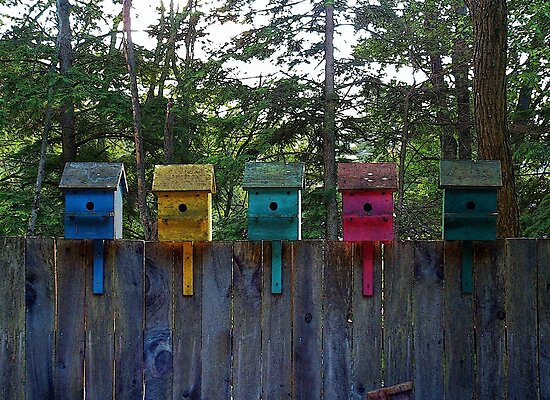
Birdhouse Blues

Democracy 2.0
Democracy Should Be a Messy Business with Lots of Noise

Spring has finally come to Rattlesnake Ridge. Last night I asked Alice to add the Wild Leeks that I had gathered on my daily walk with Boof, our Siberian Husky, to the evening meal and it turned out to be quite delightful.

Our daily walk in the shadow of Rattlesnake is a time for reflection. Sometimes I listen to the latest book I have downloaded from Audible, but mostly I prefer listening to the birds and the angry Red Squirrels that chatter from the trees, or the bears that hoot and grunt from the woods.

Quiet, the absence of sound, is really not a good thing here. The sounds of a healthy environment - the sounds I hear beneath Rattlesnake Ridge - are the noisy sounds of life: leaves rustling in the breeze, a Pileated Woodpecker drilling for insects in an old White Pine, critters large and small celebrating the return of longer days and warmer weather and readying themselves for the days ahead.

A healthy community is the same way really. There is the daily buzz of activity but there is also the conversation, debate, agreements and disagreements that attend everyday life and local governance. Sometimes it’s enlightening, sometimes it’s more heat than light, sometimes it’s funny, and sometimes downright weird.

Take the case of the late Colonel Joe Kent. Colonel Kent - a rock ribbed Republican - played a major role in my first election to the Senate in New Hampshire. He was the Co-Chair, along with Doris Tunnell, of a group calling themselves “Republicans for King”.

“The Colonel”, as he was known around town was active in local government and he showed up for every town meeting, school board meeting and quite a few planning board, conservation commission and other meetings. He and his wife Ann - a loyal Democrat - also founded a group that would eventually preserve the Quincy Bog, a beautiful example of a glacial pond habitat now on its quiet way to field as the succession and eutrophication process plays out. It is a small place on the planet that is full of life and its wondrous cacophony.

Now Joe was a conservative guy; never threw out anything that he hadn’t worn to a frazzle. He had an old jacket, the kind we rarely see these days, with leather patches on the elbows. He loved that old coat. Ann did everything she could to keep that coat presentable because Joe liked to wear it when he attended the various town meetings. She sewed it, patched it, even replaced the elbow patches when they wore out. She was beginning the process of breaking the bad news to Joe that the old jacket was just too ratty to keep repairing. Then one day she simply gave up. Into the trash it went.

Two weeks later as Ann was putting away some other clothes, she discovered the coat hanging in Joe’s closet. He had retrieved it from the trash, possibly on his weekly dump run.

One evening, a few months later, Joe wore the coat to a meeting of the town selectmen - they were all men then - Joe had retired from this “prestigious” group a few years before but that night he had some business that he needed to discuss. The topic, lost to history I’m afraid, led to a heated exchange between Joe and the town fathers until finally, at the end of his rope, Joe got up and walked out. His last words to the board were “You’ve not heard the last word from Joe Kent on this!” Whereupon he walked out of the town hall and promptly dropped dead in the parking area.

When the people of the town gathered together to say goodbye to the Colonel, including many of those who had been in attendance on that last fateful night, some may have noted that he was wearing his favorite coat. Ann buried him in that old ratty jacket. She had a great sense of humor and irony.

I tell you this story because Joe and Ann Kent represented everything that is good and decent heart-warming and funny about the wonderful people with whom I share this special spot on planet earth. They participated in the life of our community in every conceivable way.

All over our country citizens are participating in the life of their communities in the same way. Lively and raucous debates are frequent, even encouraged, because they eventually find their way into committees, or teams, or ad hoc groups of people, rolling up their sleeves and getting down to the hard business of building consensus.

Too often, when we are bemoaning the divisions in our country, we pine for consensus but forget that the process for achieving it is often messy. In fact, the messier it is - the more often that citizens feel that their hands have touched it and they have been heard - the more likely it is that the middle will hold and consensus will be achieved. Bi-partisanship, civility, all of these things we feel to be in short supply these days are at the end of this rainbow but the rainstorms, the thunder and the lightning must come first.

The folks on Rattlesnake Ridge know this. Town meetings are never dull. Everyone who wants their say gets it. Usually it’s pretty civil but not always. A few years back, one attendee referred to me as “Comrade” suggesting that I was a big spender for wanting to see some improvements to the school. Months later that same fellow rescued Boof when he got away from me on our walk, we had a great conversation when I came to fetch him. Remarks made in the heat of the debate were forgotten and we were just good neighbors reaching out to one another.

Unfortunately, the folks who are leading our country seem to have forgotten all this. The procedures and rules that have been created in both the House and the Senate are designed to stifle debate and closely control the agenda. This process denies the American people the opportunity to understand the full range of opinions and options for resolving the issues we confront.

It also allows small groups of partisans, particularly those inclined to think way outside the mainstream, to avoid having to defend their positions openly, where we can see and hear the extent of their ‘crazy”. They are often able to quietly control the agenda without having their views exposed in their full measure.

Loon Island Misty Mindscape
Take the case of the United States Senate “silent” Filibuster. Today any Senator can choose to “filibuster” a bill by simply signing a form. Unlike the “talking” method of filibustering, so memorably depicted in “Mr. Smith Goes to Washington” by the great Jimmy Stewart, no Senator has to go through the uncomfortable process of debating the bill openly, or listening to the debate.

In both the House and the Senate, leadership of the majority party controls everything that comes to the floor and a Senate President or Speaker of the House decides what bills will or won’t receive a vote. This led, during the Obama Administration, to the nomination of a Supreme Court Justice, Merrick Garland, who never received a vote and thus was never seated, one of the great injustices in our Democratic history.

More recently, though there is broad consensus on the matter of the “Dreamers”, Speaker of the House Paul Ryan refuses to bring a bill to the floor because, he says, the President has not given any indication of what he will support and Ryan does not wish to deliver a bill to the President that he won’t sign. Ryan ignores the fact that the separation of powers, so carefully designed in the constitution, between the legislative and executive branches, presumes that Congress will act on what it sees as the best interests of the country and the President will take action on what Congress passes based on what he or she sees as the best interests. Congress is not subservient to the President, it is equal. Furthermore, such subservience did not keep Ryan from bringing no fewer than 30 bills abolishing the ACA aka ObamaCare to the floor, with no consultation with President Obama. His hypocrisy belies his deceit.

This problem exists when either party is in control of the House and the Senate. They may handle it differently but the results and the power plays engaged remain the same. Whether leaders are Republican or Democrat each is inclined to place their thumbs on the scales of debate and transparency.

Bringing such bills and resolutions to the floor is important, whether they will pass muster with the President or not, because this creates the opportunity for open debate, allowing the American people to take the measure of those making the case for passage or defeat of the legislation and, even more important, creates the opportunity for the public to hear the debate so that they better understand the ideas and their implications.

During the past few weeks a few small rays of light have shown through the dark shadows of Congress on this. In the House, a group of Democrats and Republicans have taken the first steps toward exercising a provision that allows a bill to be brought to the floor over the objections of the Speaker, specifically on the Dreamers act. If they continue in this direction the House will have the opportunity to vote on a Dreamers act, despite the Speaker’s roadblocks.

In the Senate a movement to create a law to protect the transparency of the Special Counsel’s findings in the Mueller investigation, even if the President removes him from his appointed office or uses the removal of some other appointee to try to limit the scope of the investigation. Republican Leader McConnell has indicated his opposition but members are pushing back and may be successful.

These efforts show some signs of hope but the central problem remains the same. House and Senate rules too often centralize control over the people’s representatives, contrary to the best interests of the American people and Democracy itself.

Democracy - or more specifically American Democracy - today is at a point of maximum danger. In an “Age of Accelerations” the world is moving and changing at a breathtaking rate. If Democracy is to move as rapidly and agilely, we need to make the process capable of meeting the challenges. Opening that process up, decentralizing it and giving power back to the people’s representatives will be much more noisy but also more transparent and productive.

If the Leadership feels they need something to do in order to be relevant, I suggest that they begin thinking about the future and crafting opportunities for members to debate, learn and discuss issues relevant to our future. It would be a nice change to have our representatives thinking ahead and beginning to ask themselves the big questions that will help us meet the challenges of the future instead of responding in crisis mode because we have failed to think about them.

Just as my noisy woods are a sign of a healthy environment; Just as my contentious and raucous community is a sign of a healthy democracy at the local level; Open, honest and thoughtful debate at the national level are needed to help us move from Democracy 1.0 to Democracy 2.0 without stumbling any more than we already have.

We need more debate, more noise, not less.

-=-=-=-=-=-
About Wayne D. King: Wayne King is an author, artist, activist and recovering politician. A three term State Senator, he was the 1994 Democratic nominee for Governor and most recently the CEO of MOP Environmental Solutions Inc., a public company in the environmental cleanup space. His art is exhibited nationally in galleries and he has published three books of his images. His most recent novel "Sacred Trust" a vicarious, high voltage adventure to stop a private powerline has been published on Amazon.com. He lives in Rumney at the base of Rattlesnake Ridge and proudly flies both the American and Iroquois Flags. His website is: http://bit.ly/WayneDKing


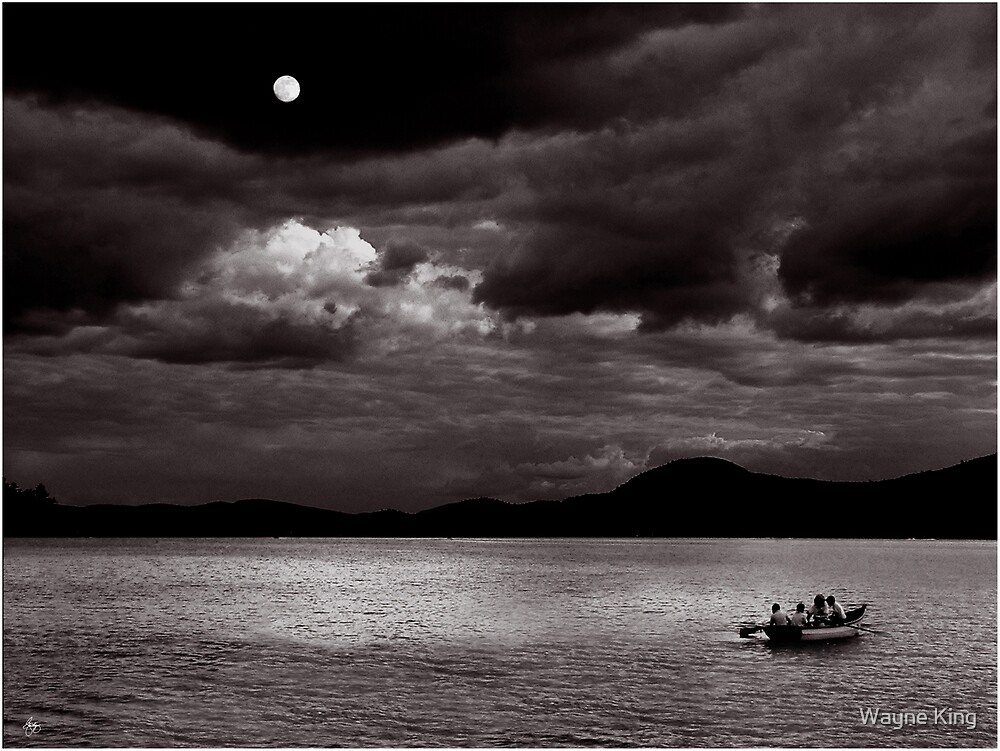
Storm Chasers