|
| American Spirit |
The View From Rattlesnake Ridge
Ruminations from an Unabashed Optimist, an Environmental Patriot and a Radical Centrist
Roaring Back Economically
Now is the Time for a Basic Income and National Healthcare
In this age of Covid-19, I am unable to experience the day to day joys of sharing time with neighbors and measuring their sentiments, hearing their stories, and drawing on them for life lessons. There will come a time, again, when we will be able to do this, and again I will return to my perambulations among neighbors in search of their stories and sensibilities for this column.
For now, my walks and rambles are solitary. I am alone with only my thoughts, the sounds of the brook, the wind, the pileated woodpeckers hammering at the trees, the red squirrels chattering at me. Some days my thoughts are small and parochial. Some days they range like a mountain lion, covering ground like a river tracing its tributaries high into the rocky precipices.
Lately, most of those thoughts have focused on the tragedy confronting our beloved American family. Today, my mind wandered to my other family, a proud part of the American family but also distinctive in its own way.
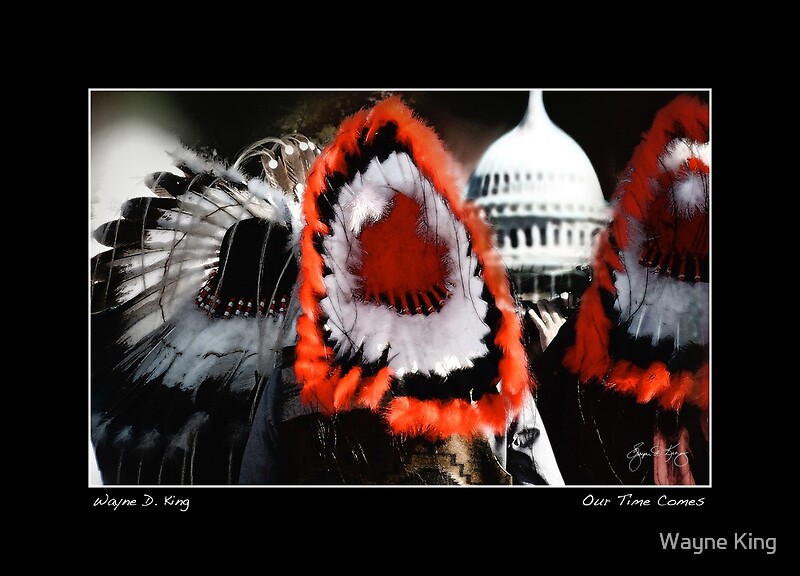
My Grandfather’s people, and by birthright mine, the Haudenausanee - also known as the Iroquois - in the early years of the republic would range well down into the Rattlesnake Ridge area from time to time, sometimes in search of game and other times empire. For 500 years before the birth of the United States, the Iroquois people nurtured and sustained the first and only democratic republican form of government. Long before the birth of Jefferson and Adams, even before John Locke from whom Adams and Jefferson drew inspiration, the Iroquois were gathering to make decisions collectively and democratically. There is evidence that Ben Franklin looked to the Iroquois confederacy as he helped craft the US Constitution.
One of the most striking aspects of the Iroquois Confederacy’s democratic deliberations is that they were required to consider the effect of their actions, not just in terms of their immediate needs, but in light of the effect on the next 7 generations before arriving at a decision. So today I am doing just that in my rambling ruminations.
This pandemic has laid bare many of the weaknesses in our democracy and our economy. A significant portion of the economic tragedy has its roots in an economy that for 50 years - since the early 1970s - has slowly drained wealth from the middle class, the working class and the poor. Only a year ago a report from the Federal Reserve found that 40% of Americans would be unable to cover a $400 emergency with cash, savings, or a credit card. This growing disparity of wealth had already begun to blossom into a crisis before we were struck with the Covid-19 crisis affecting every aspect of American lives.
The existential crisis of Climate Change has faded from the light of public discourse, eclipsed by an even more immediate crisis. But, like the Covid-19 Pandemic, Climate Change is a science-based crisis and if there is one thing that we have all learned - with the possible exception of the Trump administration - science-based challenges don’t respond to lies, bullying, and spin. Eventually, they will bite you.
The marginalization of communities of color has come into full public view as the numbers of cases and deaths among black, brown, and Indian communities dramatically outpace even the high numbers among the general population.
These and other challenges are mixed in the rich stew of partisanship and culture wars, cooked up by Newt Gingrich in 1994 and today boiling vigorously as Donald Trump turns up the heat in anticipation of the coming election. One need only count the number of times the President uses the words “I” and “me” when he addresses the nation or the media, and how little he uses the word “we”. His lack of empathy for the 80,000 plus Americans who have lost their lives is shocking and disheartening, but not surprising.
The good news is that American’s have come together as we always do in a real crisis. There are signs that the efforts of a small vocal minority supported by the President are causing even that rare unity to fray but polling shows that most people have taken their lives and their safety into their own (well-washed) hands and have stopped listening to the President and turned their attention to those who will tell them the truth.
Even Congress has demonstrated a willingness to push partisanship aside in the best interests of the American people. Let’s hope they continue to do so because the challenges ahead are going to require that they continue to step up and that the sacred cows of both the Republicans and the Democrats will be put to the test and found wanting.
This Pandemic raging around us has created the perfect storm for many Americans - a catastrophic convergence of forces over which we have almost no control.
Since the beginning of this pandemic, it is estimated that 27 million Americans have already lost their health care insurance and that number may rise to 45 million before the worst is over. Despite this, the Trump administration refuses to reopen enrollment in the ACA, otherwise referred to as “Obama Care”. Congress should immediately reopen the ACA enrollment. Furthermore, they should do something they have stopped doing for a long time - taking a page from the Iroquois Confederacy and looking for solutions that consider the next 7 generations of Americans. Americans deserve a national healthcare plan that covers every single American.
Over the course of the last few years I have made the case for an American Dividend, more commonly referred to as a Universal Basic Income based on the presumption that Americans have contributed to the wealth of the nation through their sacrifices, their labor, and their taxes - but have never been included as shareholders in the economic miracle. I won’t reiterate all of the arguments for a UBI here, but you can read previous columns about it and there are a lot of people of all political persuasions who are now talking about it and writing about it. What I will do is try - in a few paragraphs - to make the case for doing it NOW - even as a temporary measure - as the most effective way to drive our economy forward and find our way out of this pandemic while respecting and protecting one another.
As impatience grows for restarting our economy and for resuming some semblance of normalcy in our day-to-day lives we will continue to experience the push and pull between economic needs and health and safety needs. While we must let the science and data drive our decisions in order to minimize the rate of new infections and deaths, we clearly must begin making efforts where possible to reopen the economy and return to life in a new normal. However, the challenge we face is one at the confluence of science, psychology, and economics, presenting a significant challenge and the need for our leaders, and each of us, to exercise judgment. Even as our Governors and policymakers begin this process, carefully laying out rules regarding testing, tracing and isolation, social distancing, and other safety measures, many folks will not be comfortable resuming “normal” life without confidence that we have flattened the curve sufficiently to make venturing out safe. Furthermore, rebounding economically, especially for our small businesses, will be profoundly challenging at 25% or even 50% of their previous capacity. We need to find a way to harness the economic power of both those who are ready to venture out and those who are not. Here’s where a basic income for every American can drive a robust resurgence.
Amazon founder and CEO Jeff Bezos makes $6.54 billion dollars per month. If he dines at the most expensive restaurant in America, “Per Se” Restaurant in New York City, it will cost him $685.00. In his home state of Washington, “the Herbfarm Restaurant”, located on the outskirts of Seattle will cost you a more affordable $285. But Jeff Bezos can only eat ONE dinner.
One month of Jeff Bezos income would cover a $2,000 basic income for three million two hundred seventy thousand Americans, roughly 1% of the entire population; men, women and children; roughly 2% of American households.
So here’s a simple question: What is going to have a greater impact on the US economy: a month of dinners for Jeff Bezos (at $8,550) or 10 million dinners purchased by American families from local grocery stores and restaurants? Which of these is more likely to help save small businesses on Main street?
Now I’m not picking on Jeff Bezos, whom I admire immensely, but last year any one single American paid more in taxes than Amazon, which paid no taxes because of a tax code heavily skewed to the wealthy in our nation.
Businesses don’t create jobs, CONSUMERS create jobs through demand and businesses respond by hiring labor sufficient to meet the demand. It’s simple economics.
Put a basic income of $2,000 per month in the pockets of every American for the remainder of the year and it will cost half of what any of the previous 3 “relief” packages have cost and you can bet that - whether they are sheltering in place or out and about - Americans will drive the economy and support their local businesses. With real disposable income, the free market will determine how that income is used and most of the businesses we know and love in our communities all over America will find a way through this crisis. Furthermore, you will see a flurry of new entrepreneurial activity as Americans find new ways to create jobs and generate income using some of that disposable income to launch startups. In addition to this the President, The Speaker of the House, and the Majority Leader of the Senate, should appoint a blue-ribbon task force to look at ways to fund a basic income permanently.
None of this should be construed to ignore the need for an aggressive, nationally-directed system of testing, tracing, and isolating. If we had a national service requirement, that most Americans - from all parts of the political spectrum - support, we would be able to activate that network of millions of Americans to do the testing and contact tracing. As it stands the use of Americorp and Peace Corps volunteers could be activated immediately to fill much of the need. If we do not aggressively develop such a system quickly, few of us will feel comfortable about emerging into a world where a simple, and desperately needed, embrace can end in tragedy.
Americans of all political persuasions have set aside their differences in this pandemic and we can hear the faint but growing sound of the American song rising from their efforts, as they cheer for our frontline heroes, as they check on elderly neighbors and greet one another walking in the park or on the trail, even in acts as simple as paying for the coffee of the next car in line at the Dunkin Donuts drive-through.
Keep singing. Don’t let tribalism and partisanship derail what could be the great American renaissance after we beat back Covid-19. Dream 7 generations ahead.
Wayne King is an author, artist, activist and recovering politician. A three-term State Senator, he was the 1994 Democratic nominee for Governor and most recently the CEO of MOP Environmental Solutions Inc., a public company in the environmental cleanup space. His art is exhibited nationally in galleries and he has published three books of his images with another, "New Hampshire - a Love Story", on the way. His most recent novel "Sacred Trust" a vicarious, high voltage adventure to stop a private powerline is available on Amazon.com. He lives in Thornton, between Rattlesnake Ridge and the Waterville Range. He proudly flies both the American and Iroquois Flags. His website is: http://bit.ly/WayneDKing
UBI, Basic Income, American Dividend, Roaring back, recovery, Pandemic, Covid-19, truth, testing, healthcare, insurance, national service
Ruminations from an Unabashed Optimist, an Environmental Patriot and a Radical Centrist
Roaring Back Economically
Now is the Time for a Basic Income and National Healthcare
In this age of Covid-19, I am unable to experience the day to day joys of sharing time with neighbors and measuring their sentiments, hearing their stories, and drawing on them for life lessons. There will come a time, again, when we will be able to do this, and again I will return to my perambulations among neighbors in search of their stories and sensibilities for this column.
For now, my walks and rambles are solitary. I am alone with only my thoughts, the sounds of the brook, the wind, the pileated woodpeckers hammering at the trees, the red squirrels chattering at me. Some days my thoughts are small and parochial. Some days they range like a mountain lion, covering ground like a river tracing its tributaries high into the rocky precipices.
Lately, most of those thoughts have focused on the tragedy confronting our beloved American family. Today, my mind wandered to my other family, a proud part of the American family but also distinctive in its own way.
My Grandfather’s people, and by birthright mine, the Haudenausanee - also known as the Iroquois - in the early years of the republic would range well down into the Rattlesnake Ridge area from time to time, sometimes in search of game and other times empire. For 500 years before the birth of the United States, the Iroquois people nurtured and sustained the first and only democratic republican form of government. Long before the birth of Jefferson and Adams, even before John Locke from whom Adams and Jefferson drew inspiration, the Iroquois were gathering to make decisions collectively and democratically. There is evidence that Ben Franklin looked to the Iroquois confederacy as he helped craft the US Constitution.
 |
| Esheheman's Breath |
This pandemic has laid bare many of the weaknesses in our democracy and our economy. A significant portion of the economic tragedy has its roots in an economy that for 50 years - since the early 1970s - has slowly drained wealth from the middle class, the working class and the poor. Only a year ago a report from the Federal Reserve found that 40% of Americans would be unable to cover a $400 emergency with cash, savings, or a credit card. This growing disparity of wealth had already begun to blossom into a crisis before we were struck with the Covid-19 crisis affecting every aspect of American lives.
The existential crisis of Climate Change has faded from the light of public discourse, eclipsed by an even more immediate crisis. But, like the Covid-19 Pandemic, Climate Change is a science-based crisis and if there is one thing that we have all learned - with the possible exception of the Trump administration - science-based challenges don’t respond to lies, bullying, and spin. Eventually, they will bite you.
The marginalization of communities of color has come into full public view as the numbers of cases and deaths among black, brown, and Indian communities dramatically outpace even the high numbers among the general population.
These and other challenges are mixed in the rich stew of partisanship and culture wars, cooked up by Newt Gingrich in 1994 and today boiling vigorously as Donald Trump turns up the heat in anticipation of the coming election. One need only count the number of times the President uses the words “I” and “me” when he addresses the nation or the media, and how little he uses the word “we”. His lack of empathy for the 80,000 plus Americans who have lost their lives is shocking and disheartening, but not surprising.
The good news is that American’s have come together as we always do in a real crisis. There are signs that the efforts of a small vocal minority supported by the President are causing even that rare unity to fray but polling shows that most people have taken their lives and their safety into their own (well-washed) hands and have stopped listening to the President and turned their attention to those who will tell them the truth.
Even Congress has demonstrated a willingness to push partisanship aside in the best interests of the American people. Let’s hope they continue to do so because the challenges ahead are going to require that they continue to step up and that the sacred cows of both the Republicans and the Democrats will be put to the test and found wanting.
This Pandemic raging around us has created the perfect storm for many Americans - a catastrophic convergence of forces over which we have almost no control.
Since the beginning of this pandemic, it is estimated that 27 million Americans have already lost their health care insurance and that number may rise to 45 million before the worst is over. Despite this, the Trump administration refuses to reopen enrollment in the ACA, otherwise referred to as “Obama Care”. Congress should immediately reopen the ACA enrollment. Furthermore, they should do something they have stopped doing for a long time - taking a page from the Iroquois Confederacy and looking for solutions that consider the next 7 generations of Americans. Americans deserve a national healthcare plan that covers every single American.
Over the course of the last few years I have made the case for an American Dividend, more commonly referred to as a Universal Basic Income based on the presumption that Americans have contributed to the wealth of the nation through their sacrifices, their labor, and their taxes - but have never been included as shareholders in the economic miracle. I won’t reiterate all of the arguments for a UBI here, but you can read previous columns about it and there are a lot of people of all political persuasions who are now talking about it and writing about it. What I will do is try - in a few paragraphs - to make the case for doing it NOW - even as a temporary measure - as the most effective way to drive our economy forward and find our way out of this pandemic while respecting and protecting one another.
As impatience grows for restarting our economy and for resuming some semblance of normalcy in our day-to-day lives we will continue to experience the push and pull between economic needs and health and safety needs. While we must let the science and data drive our decisions in order to minimize the rate of new infections and deaths, we clearly must begin making efforts where possible to reopen the economy and return to life in a new normal. However, the challenge we face is one at the confluence of science, psychology, and economics, presenting a significant challenge and the need for our leaders, and each of us, to exercise judgment. Even as our Governors and policymakers begin this process, carefully laying out rules regarding testing, tracing and isolation, social distancing, and other safety measures, many folks will not be comfortable resuming “normal” life without confidence that we have flattened the curve sufficiently to make venturing out safe. Furthermore, rebounding economically, especially for our small businesses, will be profoundly challenging at 25% or even 50% of their previous capacity. We need to find a way to harness the economic power of both those who are ready to venture out and those who are not. Here’s where a basic income for every American can drive a robust resurgence.
Amazon founder and CEO Jeff Bezos makes $6.54 billion dollars per month. If he dines at the most expensive restaurant in America, “Per Se” Restaurant in New York City, it will cost him $685.00. In his home state of Washington, “the Herbfarm Restaurant”, located on the outskirts of Seattle will cost you a more affordable $285. But Jeff Bezos can only eat ONE dinner.
One month of Jeff Bezos income would cover a $2,000 basic income for three million two hundred seventy thousand Americans, roughly 1% of the entire population; men, women and children; roughly 2% of American households.
So here’s a simple question: What is going to have a greater impact on the US economy: a month of dinners for Jeff Bezos (at $8,550) or 10 million dinners purchased by American families from local grocery stores and restaurants? Which of these is more likely to help save small businesses on Main street?
 |
Businesses don’t create jobs, CONSUMERS create jobs through demand and businesses respond by hiring labor sufficient to meet the demand. It’s simple economics.
Put a basic income of $2,000 per month in the pockets of every American for the remainder of the year and it will cost half of what any of the previous 3 “relief” packages have cost and you can bet that - whether they are sheltering in place or out and about - Americans will drive the economy and support their local businesses. With real disposable income, the free market will determine how that income is used and most of the businesses we know and love in our communities all over America will find a way through this crisis. Furthermore, you will see a flurry of new entrepreneurial activity as Americans find new ways to create jobs and generate income using some of that disposable income to launch startups. In addition to this the President, The Speaker of the House, and the Majority Leader of the Senate, should appoint a blue-ribbon task force to look at ways to fund a basic income permanently.
None of this should be construed to ignore the need for an aggressive, nationally-directed system of testing, tracing, and isolating. If we had a national service requirement, that most Americans - from all parts of the political spectrum - support, we would be able to activate that network of millions of Americans to do the testing and contact tracing. As it stands the use of Americorp and Peace Corps volunteers could be activated immediately to fill much of the need. If we do not aggressively develop such a system quickly, few of us will feel comfortable about emerging into a world where a simple, and desperately needed, embrace can end in tragedy.
Americans of all political persuasions have set aside their differences in this pandemic and we can hear the faint but growing sound of the American song rising from their efforts, as they cheer for our frontline heroes, as they check on elderly neighbors and greet one another walking in the park or on the trail, even in acts as simple as paying for the coffee of the next car in line at the Dunkin Donuts drive-through.
Keep singing. Don’t let tribalism and partisanship derail what could be the great American renaissance after we beat back Covid-19. Dream 7 generations ahead.
Wayne King is an author, artist, activist and recovering politician. A three-term State Senator, he was the 1994 Democratic nominee for Governor and most recently the CEO of MOP Environmental Solutions Inc., a public company in the environmental cleanup space. His art is exhibited nationally in galleries and he has published three books of his images with another, "New Hampshire - a Love Story", on the way. His most recent novel "Sacred Trust" a vicarious, high voltage adventure to stop a private powerline is available on Amazon.com. He lives in Thornton, between Rattlesnake Ridge and the Waterville Range. He proudly flies both the American and Iroquois Flags. His website is: http://bit.ly/WayneDKing
UBI, Basic Income, American Dividend, Roaring back, recovery, Pandemic, Covid-19, truth, testing, healthcare, insurance, national service